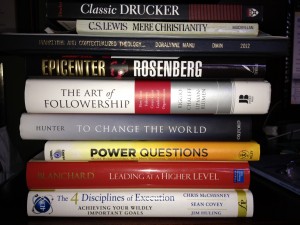
Ask any veteran “what do leaders really do?” and you’ll get a fairly predictable set of responses. You’ll probably hear that good leaders cast vision, set direction, inspire and motivate, align and communicate, coach and delegate, and listen well before making final decisions. There are dozens of “How To” leadership books published each year that repackage those skills in an attempt to help aspiring leaders lead well.
What if we asked a different question?
What if we asked veteran leaders, “How do you want to be led?”
During the past two years I had the opportunity to interact with 80 of my organization’s top global leaders who represent every area of the world. Most of these men and women have served for over 15 years in some type of distance leadership involving oversight of strategies in multiple countries. A large percentage have served outside their home nation for five years or longer. They help set longterm direction for our organization and are responsible for moving the mission forward in over 160 nations.
Here are five consistent answers that surfaced from my interviews:
1. Leaders want respect. Though respect is conferred differently in various cultures, people always appreciate graciousness, honor and appropriate deference to their experience. Mature leaders don’t demand respect, rather they exude a gravitas of character and humble confidence that reflects wisdom. Each one is worth listening to.
2. Leaders want understanding and empathy. These women and men have difficult jobs. They travel a lot. Their time is stretched thin. They are doing their best to find rhythm between work, home, church and a meaningful social life. Often they have few true peers that live nearby. Their vision typically outstrips their resources by a factor of 10 or 100. Remember these pressures in conversations where I’m evaluating their effectiveness or asking them to consider taking on a new project. Get on the same emotional page.
3. Leaders want to be led by someone honest, authentic and competent. People don’t expect their leaders to be perfect; they do expect us to be honest. They want to see us respond authentically as we share about our failures and our successes. They want to see us growing in competencies that help us do our jobs well, and thus improve the overall organization. Few, if any, mentioned that they wanted to have their direction set, their strategies formulated, or to be aligned or motivated with more words from leaders above them. If that’s not what people want from their leaders, why would we assume that we should be giving those we lead more of this type of leadership?
4. Leaders want a clear challenge to contribute to the organization’s purpose. That’s why most of them signed on. They want more clarity on the what’s of the mission, not the how’s. They’ll figure out how to get there. They want to be entrusted with more. What they need from us is an appropriate challenge, consistent support, and honest feedback on how they’re doing.
5. Leaders want to share leadership. I found this one fascinating. When our organization restructured two years ago, one of the five principles guiding our efforts was “shared leadership.” Many leaders initially resisted this, claiming that the essence of leadership (at least in their culture) was having someone in charge to make the final decisions. Yet people don’t want to be led that way. They want to voice their opinions. They want to shape overall direction. They long for the dynamic interaction among leader-followers that characterizes high performance teams. They want to be engaged in issues and decisions that they will ultimately own. They long to share leadership.
How do you want to be led?