One of many teams in a huge organization.
You are leading us; we cannot go back.
for the good work You have for us.
One of many teams in a huge organization.
You are leading us; we cannot go back.
for the good work You have for us.
Among the many lessons our digital strategies team keeps learning is the need to think from the outside in. Whether you call it user experience (UX), human centered design (HCD) or common sense, it’s critical to keep a user’s first experience in mind.
Our team offers products that reach out globally. One of the apps we develop is GodTools, serving about 900 users each day in 36 languages and has been downloaded in 195 nations. But we didn’t start there. We began with only one language, English, and have been adding on through the help of volunteer crowd-sourced translators.
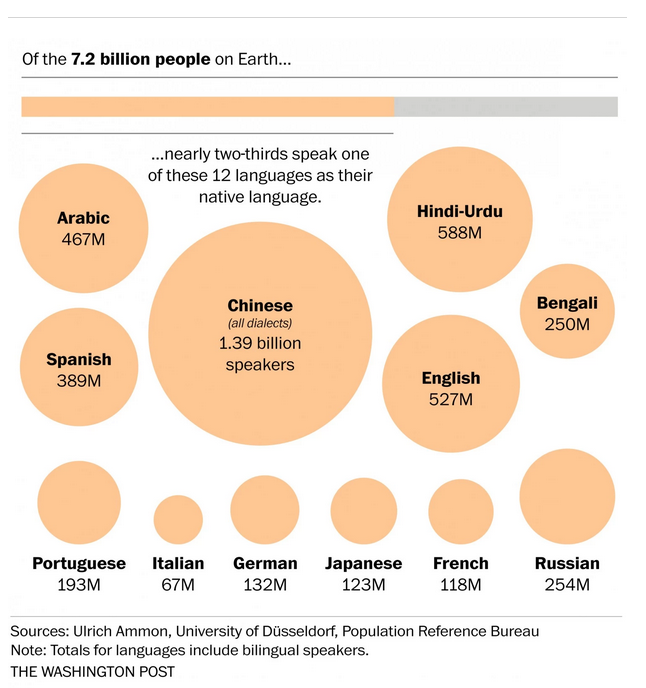
Recently we realized, thanks to this article in the Washington Post, that we were missing key languages that would greatly increase the tool’s adoption. What might happen if we were to include Bengali, German, Italian and Japanese? Now that we’ve become aware of this information, we can focus our strategy on the next best opportunities with the greatest leverage. We’ll keep this in mind, not just for one product, but for all of our digital assets, social media feeds, and web offerings.
It’s not rocket science; it’s just a simple pivot. We keep one foot firmly planted in our original plan, then pivot and plant our other foot on a more promising pathway.
Leadership in the digital age requires an immense amount of flexibility and agility as new information surfaces. Gone are the days of five year strategic plans. We operate off a clear vision map and a set of 12 month goals broken down into small tactical sprints.
How is your team learning to pivot?
One of the highlights in this season of my life is investing in younger leaders as they grow and develop. I am often asked for a conversation, book recommendations, or specific advice about “how can I increase my leadership capacity?”
Recently my friend Keith Webb wrote a fantastic blog post on this topic. He captures some key principles in how to develop younger leaders. In particular, he highlights the critical importance of developing the leader’s heart as much as developing the more visible external skills. In Keith’s words:
“Young leaders feel ready for big, fast and significant. Jesus took a different approach. Jesus viewed leader development as more about who the leader is rather than what he or she can do.
Jesus focused on the internal development of the leader – going in before going out. Because who you are is how you will lead.
What internal development is needed? Young leaders must develop:
The early, small lessons learned in these areas will form the foundation on which a leader stands. Later, when the stakes are high and the pressure is great, the leader who was faithful with little will most likely succeed with much.”
Keith also draws heavily from J. Robert Clinton’s work, The Making of a Leader, which you should consider reading if you haven’t already.