Category: Productivity

  • The Inevitability of Shared Leadership

    In today’s new rules of work, getting meaningful work done is no longer place-centric or position-centric, but people-centric.

    The use of social media, not just for play, but as a primary platform for work-related interaction, has accelerated the shift from top-down hierarchies to flatter networks. Every organization has informal networks — back channels  — that allow people to get what they need, when they need it. Mobile devices and social media have turned these obscure jungle trails into relational super highways.

    This shift affects how you, as a leader, must perceive your role as an influencer.
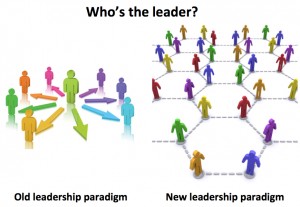
    Old and New Lship Paradigm

    Leadership is influence. Most of us were trained in a more traditional leadership model emphasizing the leader’s role as direction setter, change agent, spokesperson, problem-solver, strategy-formulator, vision caster, and aligner. Taken at face value, the net result of these roles and responsibilities will produce a leadership bench full of one-way communicators who are always selling and not necessarily listening.

    In the new leadership paradigm, each of us operates as a node in a network. We consume information, advice, counsel, and make decisions based on multiple interactions with other people, not just our boss. Who’s the leader? The one who can offer relevant help, initiate needed change, and model the way ahead. Shared leadership becomes organic in this environment; it is inevitable.

    Think about this from your own point of view. Where do you go for advice? I find myself searching Google, Twitter, or asking friends far more than I text or ring my boss.

    One implication for me as a team leader is that I must be clearer than ever with my team about who our primary audience is and what our desired outcomes are. When our mission is clear, informal networks strengthen our ability to get the work done rather than threaten my authority as a team leader. It’s time to embrace the inevitability of shared leadership.

    How are you experiencing the inevitability of shared leadership?


  • One Way to Fund Innovation: Lions’ Den

    If you’ve ever watched the show “Shark Tank,” you get the idea. In the shark tank, entrepreneurs pitch their business plans to a group of potential investors who poke and prod to determine, “Is this an idea worth investing in?” Promising projects receive funding and mentoring.

    Last weekend I, along with about 80 others, attended a Lions’ Den event in Vancouver.

    What is the Lions’ Den? Think venture capital for Christian missions. The Lions’ Den brought eleven highly promising innovation projects from around the world to pitch to dozens of highly motivated donors. A panel of five “lions” — each of whom put up $100,000 — peppered participants with tough questions, seeking to shape the future of our ministry by helping spur innovation to close the missional gap. Several projects involve social media and digital tools. This was the most exciting ministry event I’ve attended this year — God is at work!

    Does it work? I’ll let you be the judge. By the end of the 36 hour event $794,000 had been pledged to fund these eleven projects.

    You can do it, too. This wasn’t the first time the Canadian PowerToChange ministry had tried this. A few years ago they experimented with the concept on a much smaller scale, with four lions offering $5K each to fund a few promising ideas. Leonard Buhler and his team then refined their idea and cast a much larger and more compelling vision the second time around. Iteration leads to improved innovation. 

    What might it look like for your team to sponsor a Lions’ Den?

  • What’s On Your Crazy List?

    “You’re becoming a complete grouch,” Ann told me.

    This was not the sugar-coated pickup line I expected while on a date night with Ann a few years ago. She had my attention now. As the evening unfolded I discovered a blind spot that I had not been aware of. That’s the nature of blind spots.

    In brief, I was bringing too many of my work challenges and people problems home with me. Ann, my trusted partner, lovingly listened and offered counsel. But apparently the volume of my complaints and frustrations had morphed into a unceasing river of cynicism. Our marriage was becoming the toxic waste dump of the ministry. Sludge oozed onto the dinner table in front of the kids. I was also setting a very poor model as a leader. Why wouldn’t others around me feel free to cast verbal rocks at our organization?

    Something had to change.

    The next morning I repented of my sin, opened my journal, and wrote out a long list of all the issues, challenges, missed opportunities, jobs that aren’t being done right (IMHO), and people problems that plagued me. I committed to bring them to the Lord in prayer before talking to other people about them. I titled the page “My Organizational Crazy List.”

    Years later I still practice this simple habit. There are many benefits to keeping a Crazy List.

    • It helps me honestly pour out my heart to the Lord
    • It prevents me from spewing cynicism onto others
    • It keeps the natural byproducts of leadership from becoming toxic waste in my marriage
    • It allows me to focus on what I am called to do and not try to do everyone else’s job
    • It serves as a written record of God’s grace as he deals with the crazy-makers

    Want some stats? My latest Crazy List accumulated 23 items over several months. I just checked it today. Sixteen of those issues have been resolved or disappeared. I did not exert noticeable effort making any of them go away. God did it. Seven remain.

    Thanks, Ann. You had me at “grouch.”

    What’s on your Crazy List?