Leaders tend to be people of action. Doers. Agents of change. That’s good and necessary because we all know that talk is cheap. Effective leadership is all about turning vision into action, right?
For me, problems arise when my bias toward action becomes a treadmill of ceaseless activity. This tires everyone out and inevitably leads to a loss of focus, loss of presence, personal fatigue and mission drift. This is when I become vulnerable to the temptation of lesser things: quick fix ‘solutions’ (sinful or otherwise) for urgent problems that mask a waning intimacy with my Source of power, life and strength.
In our overloaded media-saturated world, reflection is becoming a lost art.
This week I’m up at Bethel Seminary in St. Paul, Minnesota, enjoying a wonderful week-long intensive focused on the Servant Leader’s Inner Life. Our readings and conversations reinforce the absolute necessity of cultivating habits of reflection. Justin, our prof, opened the week by asking us to think about two leaders who have experienced personal or professional failure due to lack of attention to the inner life. This launched a 90-minute discussion (we had no shortage of examples) around what may have contributed to these failures, and what personal habits may have helped prevent them, had they been in place.
As if on cue, my friend Sam in Nigeria sent me a link to a column entitled “Your Most Important Conversation” by Gordon MacDonald. Gordon is one of my favorite writers because he knows what it’s like to fall and he writes with authentic, grounded spirituality. This quote caught my attention:
Withdrawal for inner conversation parallels the priority flight attendants express when passengers on a plane are told that, if the oxygen masks appear, they should put theirs on first before helping others. Counter-intuitive, especially for mothers, but thoroughly logical.
Writer Anthony Bloom described his father as a man who knew inner conversation well. When he felt the need to do his own soul-work, he would sometimes tack a sign to his front door: “Don’t go to the trouble of knocking. I am at home, but I will not answer the door.”
This is not easy for those of us who are people-pleasers. We are suckers for knocks on our front door.
Are you a sucker? Servant leaders are called not to please people, but to please the Lord by meeting people’s real needs as they are revealed through interaction and reflection. In my experience, the busier my schedule, the more I need to carve out space to think, listen, pray and reflect. Think Jesus in Mark 1, pulling away before dawn when everyone was looking for him.
What habits help you practice reflective leadership?
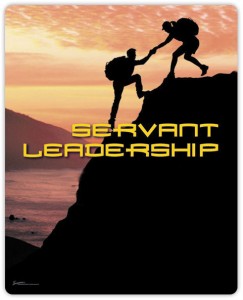 More and more conversations revolve around the type of leadership required in our rapidly changing global culture. Many cite the “new skills” needed in this environment, such as trust-building, empathy, networking, and the ability to empower others. Though few will come out and label this package as such, it seems to me we’re really talking about servant leadership.